Overview

What is an Endoscopic Facelift?

An endoscopic facelift is a surgical facial rejuvenation procedure performed using an endoscope, a slim camera that allows the surgeon to view and work within the tissues through relatively small incisions.

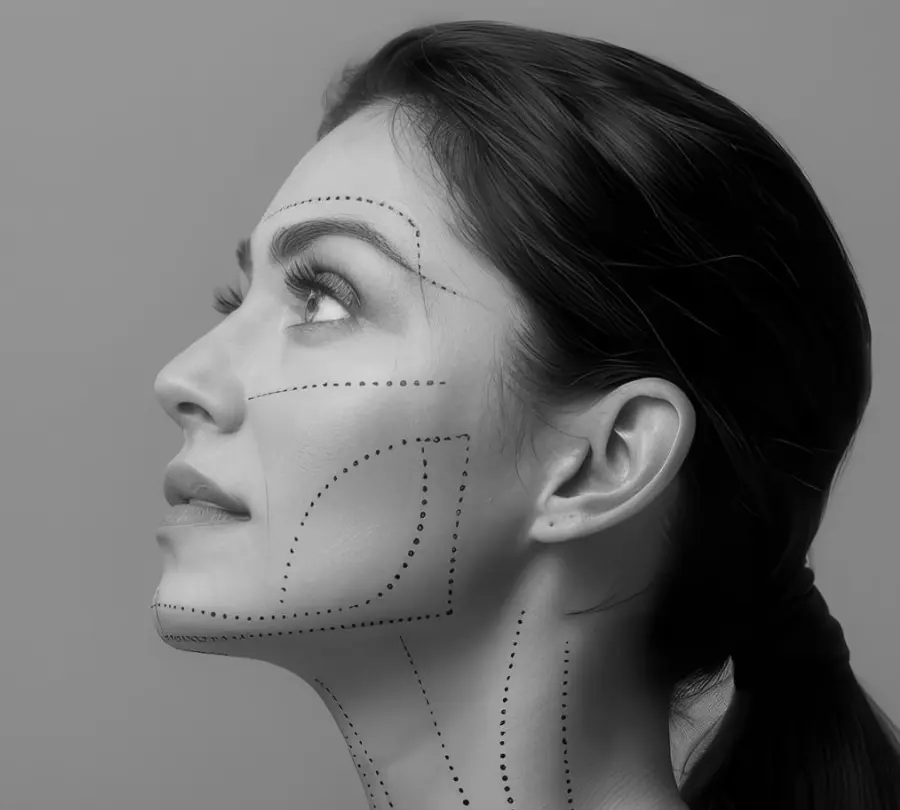
Depending on the treatment plan, the endoscopic approach may be used to address areas such as the forehead, brow, temples and mid-face. The underlying tissues can be released, repositioned and supported through carefully planned access points. The precise technique varies according to the patient’s anatomy and the area being treated.

The important point is that an endoscopic facelift is not simply a “smaller facelift”. A smaller incision does not necessarily mean a smaller operation, and the procedure should be selected according to the patient’s actual ageing pattern rather than the size of the scar alone.

In suitable patients, an endoscopic approach may help improve:

  • Early to moderate facial tissue descent
  • Reduced cheek definition
  • Mild jowling
  • Loss of mid-face support
  • Drooping or heavy-looking brows when an upper-face lift is included
  • Certain signs of facial ageing where repositioning deeper tissues is more appropriate than simply tightening the skin

A facelift is designed to address structural changes associated with facial ageing. It does not stop the natural ageing process, and it cannot remove every facial line or correct all concerns affecting the skin, eyelids, lips or facial volume.

Why does the face begin to look older?

Facial ageing is a gradual process influenced by several factors rather than one single cause.

Changes in skin elasticity

Collagen and elastin provide structure and resilience to the skin. With age, the skin gradually becomes less elastic, making it more likely to develop laxity and wrinkles.

Descent of facial tissues

The soft tissues of the cheeks and lower face may gradually move downwards. This can contribute to jowls, less defined cheeks and changes in the lower face.

Changes in facial volume

Ageing can involve both volume loss and volume redistribution. Some areas may appear hollow, while fat compartments in other areas may descend or become more prominent.

Sun exposure and environmental factors

Long-term ultraviolet exposure can contribute to premature skin ageing. Smoking and other lifestyle factors may also affect skin quality and healing.

Genetics

Some people naturally develop facial laxity or changes in facial volume earlier than others. Family characteristics can influence the way the face ages.

Because facial ageing is multi-layered, a facelift is not always the complete answer. A patient may also require treatment for the eyelids, brow, skin quality, facial volume or neck, depending on the findings during assessment.

What signs may suggest you could benefit from Facial Rejuvenation?

There are no specific “symptoms” of facial ageing in the medical sense. Instead, patients usually seek advice because they notice visible changes that they would like to address.

These may include:

  • Sagging skin around the cheeks or lower face
  • Early jowling along the jawline
  • Reduced definition between the face and neck
  • Flattening or descent of the cheeks
  • Deepening nasolabial or marionette folds
  • A tired or heavy appearance
  • Drooping brows or forehead ageing
  • Loss of facial firmness despite maintaining a stable weight

The presence of one of these concerns does not automatically mean that an endoscopic facelift is required. A thorough assessment is important because similar concerns may sometimes be addressed with non-surgical treatments or a different surgical technique.

Who is an ideal candidate for Endoscopic Facelift?

An ideal candidate for an endoscopic facelift Dubai, is usually someone who is in generally good health, has realistic expectations and has facial ageing that can be appropriately addressed through the proposed technique.

You may be considered suitable if you:

  • Have mild to moderate facial laxity
  • Notice early changes in the cheeks, mid-face or jawline
  • Want to improve facial ageing without an unnecessarily extensive procedure
  • Have realistic expectations about what surgery can achieve
  • Are medically fit for surgery and anaesthesia
  • Do not smoke, or are able to stop smoking for the required period around surgery
  • Understand that natural ageing will continue after treatment

The best procedure is not necessarily the newest or least invasive option. It is the technique that appropriately addresses the patient’s specific anatomy.

Benefits of an Endoscopic Facelift

When appropriately selected, an endoscopic approach may offer several potential advantages.

Smaller, strategically placed incisions

The incisions used for endoscopic procedures are generally placed in discreet areas, often within the hair-bearing scalp or other carefully selected locations, depending on the treatment being performed.

Improved visualisation

The endoscope provides magnified visual access to the tissues being treated. This can assist the surgeon in identifying and working within the relevant anatomical planes.

Repositioning rather than simply pulling the skin

Modern facial rejuvenation focuses on more than skin tightening. Repositioning deeper tissues can help create a result that is more harmonious with the patient’s facial structure.

Potentially less visible scarring

Because the access points may be smaller and placed discreetly, visible scarring may be reduced compared with some traditional approaches. However, every surgical incision produces a scar, and the final appearance depends on individual healing.

Endoscopic Facelift techniques and related approaches

The term “endoscopic facelift” can describe different techniques depending on the area being treated and the surgeon’s method. It is therefore important to understand what is actually being proposed rather than relying on the name alone.

Endoscopic brow or forehead lift

An endoscopic brow lift uses small incisions and a camera to reposition tissues of the upper face. It may be considered for patients with brow descent, forehead lines or frown lines between the eyebrows.

Dr Adnan Tahir’s facial surgery information describes brow lift surgery as a procedure that can address low-lying or asymmetric brows, forehead creases and furrows between the eyebrows. The exact surgical plan depends on the patient’s anatomy and the desired degree of correction.

Endoscopic mid-face or cheek rejuvenation

The mid-face can lose support with age, resulting in reduced cheek fullness or descent of the tissues. In selected patients, endoscopic techniques may be used to reposition the cheek tissues.

This approach is not suitable for every pattern of facial ageing. Significant excess skin may require a different facelift technique.

Short-scar or limited-incision facelift

A short-scar facelift may be considered for patients with more limited skin laxity who require improvement in selected areas of the lower face. It is different from a full facelift and is not intended to provide the same degree of correction in every area.

Full facelift or SMAS facelift

A traditional facelift may be more appropriate where there is more significant skin laxity, jowling or lower-face ageing. Dr Adnan’s facial surgery information describes both full facelift techniques involving the SMAS layer and shorter-scar approaches, with the treatment plan selected according to the patient’s needs.

Facelift with neck lift

Ageing often affects the face and neck together. When there is loose neck skin, jowling or loss of definition beneath the chin, a neck lift may be recommended alongside a facelift.

The aim is to create a more balanced transition between the lower face and neck rather than treating the face in isolation.

How does an Endoscopic Facelift work?

The exact surgical plan varies, but the procedure generally involves several important stages.

1. Detailed consultation and facial assessment

Before surgery, the face is assessed from different angles. The surgeon considers skin quality, facial proportions, tissue descent, volume changes, the brow, cheeks, jawline and neck.

Medical history, medications, smoking status and previous procedures are also reviewed.

2. Treatment planning

The surgeon explains which areas can realistically be improved and whether an endoscopic approach is suitable. If another technique would provide a better result, this should be discussed openly.

3. Anaesthesia

The procedure is performed under the appropriate form of anaesthesia recommended for the planned surgery.

4. Small access incisions

Small incisions are made in carefully selected locations. The endoscope is introduced through one of the access points to provide visual guidance.

5. Tissue release and repositioning

The surgeon works within the relevant anatomical planes to release and reposition tissues. Depending on the procedure, fixation or suspension methods may be used to support the repositioned tissues.

6. Skin adjustment, where necessary

If there is excess skin that cannot be adequately addressed through tissue repositioning alone, a different or additional technique may be more appropriate. This is an important limitation to understand: an endoscopic procedure cannot always replace the need for skin excision.

7. Closure and recovery

The incisions are closed carefully, and the patient is monitored during the early recovery period.

Endoscopic Facelift recovery timeline

Recovery varies according to the extent of surgery and whether other procedures are performed at the same time.

Recovery stage What you may experience
First few days Swelling, tightness, bruising and mild discomfort are common
Around 1 week Early swelling and bruising often begin to improve; some patients may resume light activities
2–3 weeks Many patients feel more comfortable socially, although residual swelling may remain
4–6 weeks Facial tissues continue to settle and activity restrictions may gradually be reduced according to medical advice
Several months The result continues to refine as swelling resolves and tissues mature

These are general expectations rather than a guarantee. The recovery period can be longer when a more extensive facelift, neck lift or combination procedure is performed.

Patients are usually advised to follow all postoperative instructions carefully. These may include keeping the head elevated, avoiding strenuous exercise for the recommended period, attending follow-up appointments and protecting healing incisions.

Risks and safety considerations

Facelift surgery, including endoscopic facial surgery, is still surgery and carries potential risks.

Possible complications may include:

  • Bleeding or haematoma
  • Infection
  • Swelling and bruising
  • Temporary or, rarely, longer-lasting changes in sensation
  • Numbness
  • Delayed wound healing
  • Hair loss around an incision in some cases
  • Visible or widened scars

The risks depend on the technique used, the patient’s health, smoking status, previous surgery and the complexity of the operation.

A consultation should include a discussion of both the potential benefits and the limitations of treatment. No responsible surgeon can guarantee a particular outcome.

Why choose Dr Adnan Tahir?

Choosing a plastic surgeon is an important decision, particularly for facial surgery where small changes can influence facial balance and expression.

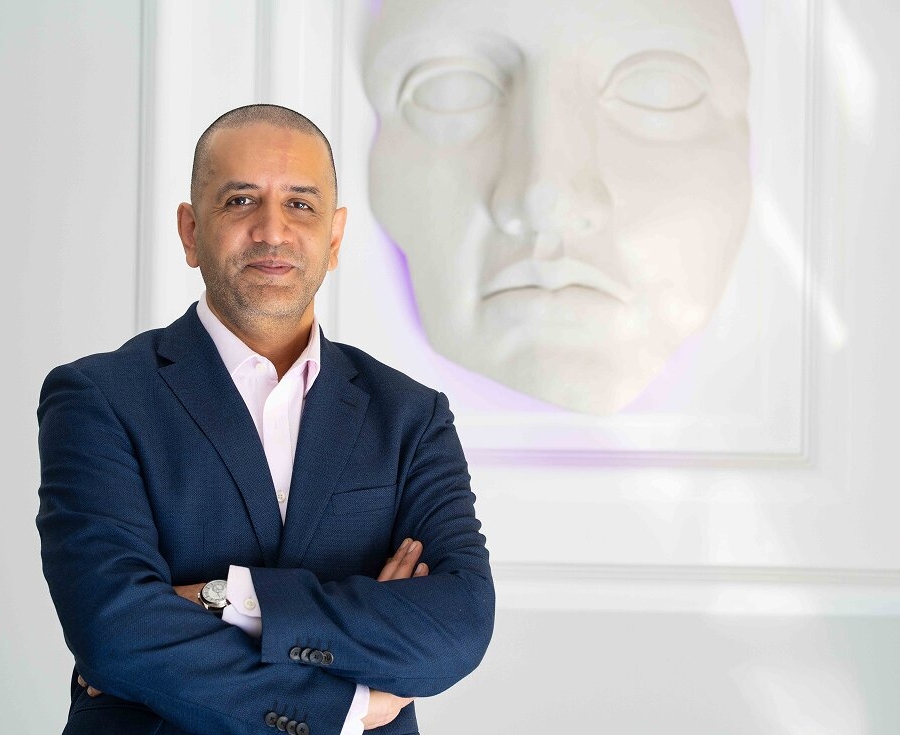
Dr Adnan Tahir is a Consultant Plastic Surgeon with extensive training and experience in the UK and UAE. His qualifications include MBBS, MRCS (England), MSc in Surgical Sciences from University College London, FRCS (Plast) from the Royal College of Surgeons of England and UK Certificate of Completion of Training in Plastic Surgery. He also completed a fellowship in aesthetic and craniofacial surgery in Rotterdam, Netherlands.

His professional experience includes consultant plastic surgery roles in the UK and Dubai, with specialist interests that include aesthetic surgery of the face, body and breast, as well as general plastic and reconstructive surgery.  With 12 years of post-CCT board-certified experience and more than 4,500 operations documented through registrar training.

Meet our surgeon- Dr Adnan Tahir

Category Details
Full name Dr Adnan Tahir
Specialty Consultant Plastic Surgeon
Main qualifications MBBS, MRCS (Eng), MSc in Surgical Sciences (University College London), FRCS (Plast), CCT in Plastic Surgery
Additional training Fellowship in Aesthetic Surgery and Craniofacial Surgery, Rotterdam, Netherlands
Dubai professional registration Dubai Health Authority Licence No. DHA-P-0156706 – Consultant Plastic Surgery
UK professional registration General Medical Council Licence No. 5201904 – Specialist Register for Plastic Surgery
Professional memberships American Society of Plastic Surgery (ASPS), International Society of Aesthetic Plastic Surgeons (ISAPS), Emirates Plastic Surgery Society (EPSS), Emirates Medical Association (EMA)
Awards and grants BAPRAS travelling bursary for DAFPRS fellowship; DAFPRS fellowship award; University College London research grant

Consider Endoscopic Facelift in Dubai with a personalised surgical assessment

Choosing facial surgery is a personal decision. Some patients want to address early signs of ageing, while others are looking for a more comprehensive improvement to the face and neck. The right treatment should be based on your anatomy, your concerns and the degree of change you genuinely want to achieve.

An endoscopic facelift in Dubai may be appropriate for selected patients seeking facial rejuvenation through an endoscopic approach, but it is not a universal solution for every type of facial ageing. Dr Adnan Tahir can assess your face, discuss the available techniques and explain whether an endoscopic approach, another facelift technique or a combination of treatments is most suitable for you.

If you are considering an endoscopic facelift in Dubai, arrange a consultation to discuss your concerns, treatment options, expected recovery and personalised cost in detail.

FAQ

Is an endoscopic facelift the same as a traditional facelift?

No. An endoscopic facelift uses an endoscope and smaller access incisions for selected facial rejuvenation procedures. A traditional facelift may involve longer incisions and may be more suitable for patients with significant excess skin or more advanced lower-face and neck laxity.

Is an endoscopic facelift suitable for older patients?

Age alone does not determine suitability. The more important factors are facial anatomy, skin laxity, general health and the type of correction required. Some patients may benefit from an endoscopic approach, while others may require a more extensive facelift.

Will an endoscopic facelift leave scars?

Any surgical incision can leave a scar. With endoscopic techniques, the incisions are often placed in discreet areas, but scar appearance varies between individuals. The final result may take time to mature.

How long does recovery take?

Many patients experience the greatest swelling and bruising during the first several days. Some may feel comfortable returning to light social activities after approximately one to two weeks, although residual swelling can continue for several weeks. Final refinement may take several months.

Will the results last permanently?

The results of facial rejuvenation can be long-lasting, but surgery does not stop natural ageing. The face will continue to change gradually over time.

Can an endoscopic facelift be combined with other procedures?

Yes, in selected patients. Depending on the patient’s concerns, treatment may be combined with other procedures such as a brow lift, eyelid surgery, neck lift or facial fat transfer.

What if I have a lot of loose skin?

If significant excess skin is present, an endoscopic technique alone may not provide sufficient correction. A conventional facelift or another approach may be more appropriate. The correct procedure should be determined during an individual assessment.

How much does an endoscopic facelift in Dubai cost?

There is no single price because the procedure varies considerably between patients. The cost depends on the technique, the areas treated, the complexity of surgery and whether additional procedures are performed. 

cosmetic surgeon in dubai

Endoscopic Facelift in Dubai: What does it cost?

The cost of an endoscopic facelift in Dubai varies considerably between patients because there is no single standard procedure or fixed treatment plan.

The final price may depend on:

  • The technique selected
  • The areas being treated
  • The complexity of the surgery
  • Whether a brow lift, neck lift, eyelid surgery or fat transfer is combined with the procedure
  • Anaesthesia and hospital or facility fees
  • Follow-up care

For this reason, an accurate cost should be provided only after an individual consultation and treatment plan. 

Reach out to him to get the best cosmetic enhancements in a safe, judgment-free environment.